
Our Indie Spotlight section usually features indie games or films. But this time, we’ve invited a young animator to tell his story: Usman, an 18-year-old freelance animator from Rawalpindi, Pakistan. He works independently on cartoons and client projects, and began learning with clay, cardboard and phones borrowed from his family.
While Usman is still developing his skills on the path to becoming a professional animator, he has already turned his hobby into paid work. The income has made a real difference in his circumstances: after his mother bought him his first computer for around $70, he earned enough through animation to buy a $1,600 replacement himself.
(The average monthly wage in Pakistan is equivalent to approximately $150.)
We found his story encouraging and invited him to write about his experiences with Cascadeur so far. We hope it will be motivating to anyone taking their first steps in animation.
Team Cascadeur
Contributed by Usman “The Animator“
Hi everyone!
I’m Usman, an 18-year-old guy from Rawalpindi, Punjab, Pakistan. I’m a freelance 3D animator, and today I want to share a little story about how I started creating cartoons with clay and cardboard, somehow became a freelance animator, and eventually discovered Cascadeur.
Okay, it was just a normal day in 2018. I was 11 years old, watching some horror cartoons on YouTube with my cousin. The cartoons had simple, colorful characters moving around in simple environments, but instead of getting scared, I was thinking about something else: how could I create these cartoons myself?
The funny thing is, I didn’t have a computer or my own phone, and I didn’t even know how cartoons were made. My family wasn’t very familiar with technology. Even touchscreen phones were a luxury for us, and Wi-Fi wasn’t even something we thought about.
So I came up with a fantastic plan: I’d buy clay, cardboard, thread, paints, glue and a professional camera, then create my own cartoons!
But wait. Where was I gonna get the money for all this? 😉
I had always loved drawing and had even won several art competitions, but at that time, I never imagined that my little drawings could eventually become something serious in my life.
2019: My First Cartoons, Made With Clay
In 2019, when I was around 11 or 12, I had a road accident and broke my leg. I spent almost two months in bed, and my schooling was disrupted for nearly a year. It was painful, but strangely, those months gave me something very important: a lot of time to imagine.
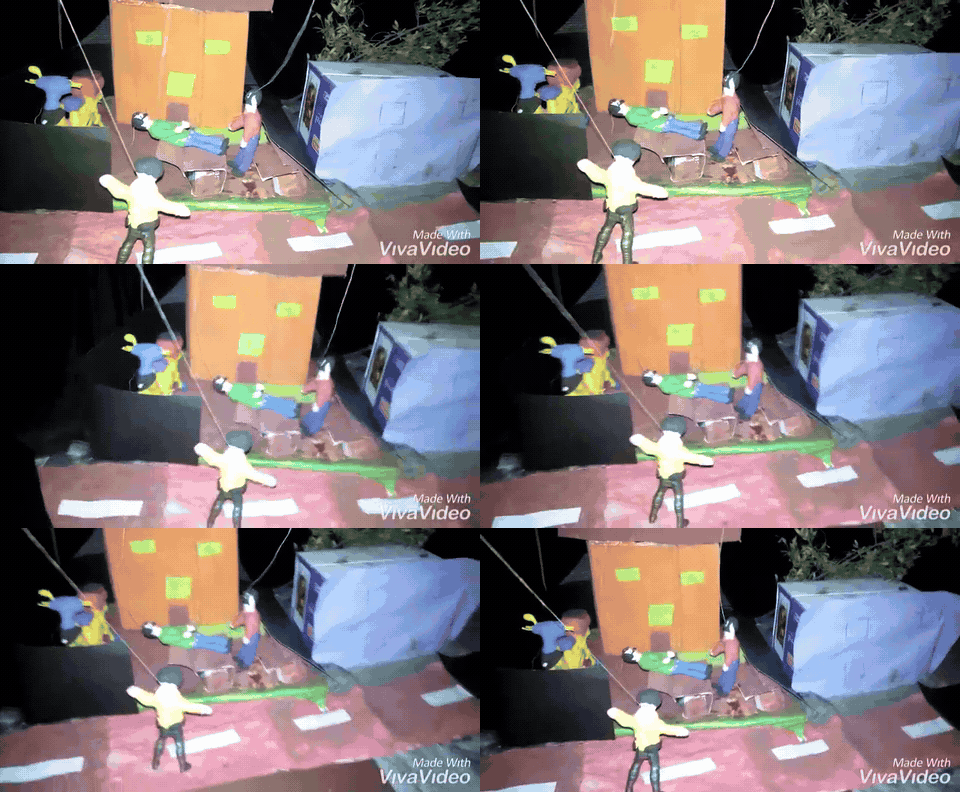
I read books, wrote stories, drew characters, and even sent my artwork to magazines and won some prizes. When I was finally able to walk again, I decided to make my first horror cartoon film. I sculpted characters using clay, moved their arms and legs with thread, and made environments using cardboard and real-world objects.
I was so proud of these cartoons. I genuinely thought I had created something professional, hahaha!
I even uploaded them to YouTube. Of course, nobody was particularly interested in watching those little clay characters moving around 😉 But I loved creating them, and I think that’s what mattered the most.
Here’s a few seconds from one of my little clay cartoons from 2019. I created the characters and environment myself, and tried to bring them to life using thread and simple physical movements.
2020–2023: Animating on My Family’s Phones
Later, I discovered something called Prisma3D, an Android application that allowed me to model, rig and animate characters digitally. And honestly, it felt like magic!
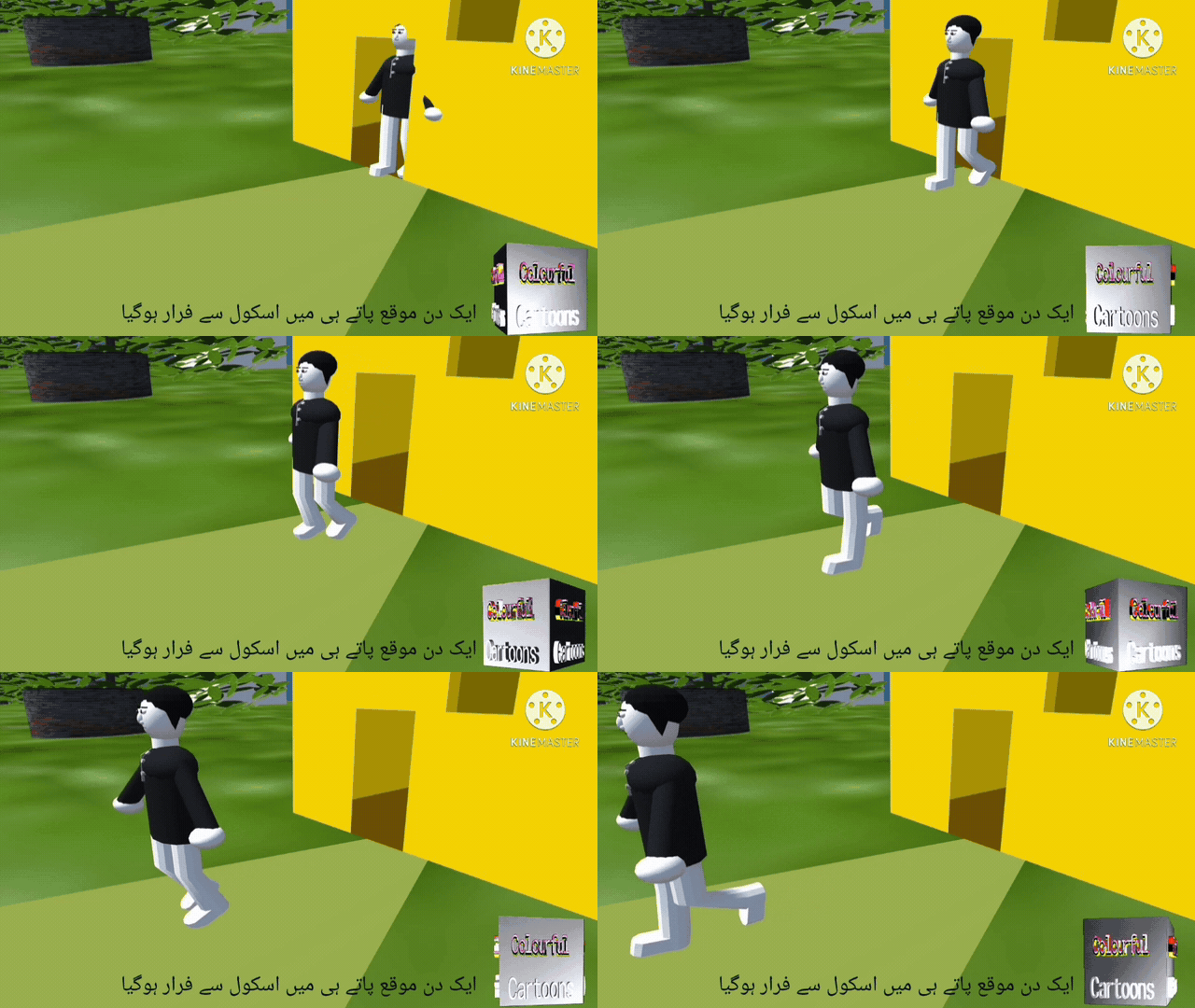
But there was another problem: I still didn’t have my own phone. So I used my family’s phones to learn Prisma3D, KineMaster and other applications. Sometimes I had access to a phone, sometimes I didn’t; I just worked whenever I got the chance.
I continued creating little cartoons and experimenting with digital animation for almost three years. Here are some of my old experiments, from when I was learning how to create characters, animate them and edit everything together on mobile devices.
These little projects taught me a lot, even though I had almost no proper equipment. But one day, while watching YouTube, I discovered Blender. It looked like a much more complicated version of Prisma3D, and I wanted to learn it immediately.
Only one problem: I needed a computer.
Late 2023: The $72 Computer That Changed Everything
I started asking my parents for a computer, again and again. Sometimes I cried, sometimes I begged, and sometimes I tried explaining what Blender was, even though I barely understood it myself!
My parents were worried that having a computer would distract me from my studies, and some relatives also discouraged them from buying one. I understand their concerns. For a family that wasn’t very familiar with computers or animation, spending money on something like this wasn’t an easy decision.
Eventually, I almost gave up, but in late 2023, when I had just turned 16, I started asking again. And finally, my mother bought me my first computer! It cost just 20,000 Pakistani rupees, around $72 at the time.
Now, $72 might not sound like a huge amount to some people, but in my family’s circumstances, it was a serious purchase, especially for something nobody knew would ever earn money. To other people, it was an old, almost useless computer. But to me? It was everything.
I installed Blender, watched tutorials and started learning 3D animation, but learning wasn’t that simple. My English wasn’t very good, and there weren’t many detailed Blender tutorials available in Urdu or Hindi. Sometimes I spent hours trying to understand something very basic. I remember struggling to create even a simple blocky character and wondering how people were creating those beautiful animated films.
Still, slowly, I started making my own little projects. Here’s my first complete Blender animation, which I shared in December 2023. I created it while learning the very basics of 3D animation.
i am trying to be a consistent to be an animator and i will upload content consistently.this is my first 3d project from fifty projects. https://t.co/jkAip5cxVZ
— Usman the animator (@Mohamma28347559) December 16, 2023
Looking at it now makes me laugh, but I was genuinely happy when I finished it.
2024: Wait, People Actually Pay for Animation?
In 2024, when I was 16, my brother watched one of my animations and suggested something interesting: why didn’t I sell my animation skills? I thought he was joking. Who would pay me for making cartoons?
But I created a Fiverr account anyway, and in August 2024, I received my very first order. I was so excited that someone was actually willing to pay for my animation work.
Here’s an example of my early freelance work, rendered on a fourth-generation Intel i5 processor with no dedicated GPU.
Unfortunately, freelancing wasn’t so easy. I faced dishonest clients who took my work and tricked me into doing more and more. They knew how Fiverr worked, and I was a complete newbie. With cancelled orders, very cheap projects and lots of competition, I almost quit several times.
Then a client from Germany hired me to create nine cartoon episodes, and for the first time, I earned hundreds of dollars from animation. Here’s one of those episodes:
Gradually, I started working on different projects, including animated shorts, games, character modeling and rigging. I wasn’t specialized in anything: if someone needed a panda, a gorilla, a product model, a game animation or a cartoon, I would try to do it.
And then something happened that I still find a little unbelievable.
April 30, 2025: From $72 to $1,600
On April 30, 2025, when I was 17, I bought a new computer worth almost $1,600, with money I had earned through my own freelance work!
Just imagine: the same boy who had begged to get a $72 computer was now sitting in front of a much more powerful machine. My mother had bought me my first computer, and now I was able to buy another one myself. It was one of the happiest moments of my life.
But I soon realized something important: a powerful computer doesn’t automatically make you a powerful animator. I had better hardware, more experience and actual clients, but I was still struggling with animation principles, body mechanics, realistic character movements and many other things.
And this is where Cascadeur entered my life.
December 2025: Discovering Cascadeur
In December 2025, when I was 18, I was scrolling through X when I saw a post about Cascadeur. The animation looked so natural, and its physics and posing tools seemed unbelievable. I genuinely thought it was some complicated machine-learning software developed for big animation studios, not something ordinary independent artists could use. I even left a comment on that post, hahaha.
Later that month, I discovered that Cascadeur was actually available for independent animators, so I purchased Cascadeur Indie. I was 18 then, and I’m still 18, by the way.
I started experimenting with AutoPosing, Inbetweening and the physics tools, and honestly, it felt miraculous. Before Cascadeur, I struggled with body mechanics, balance and unnatural character movements in Blender. Cascadeur made many of these things easier.
Soon, it became part of my regular workflow. I would prepare characters in Blender, animate them in Cascadeur, and export everything back into Blender or Unreal Engine. I even started using it for freelance projects, especially game animations.
But here’s something funny: I was using Cascadeur professionally without even understanding it properly. I knew AutoPosing, Inbetweening and basic physics, but barely understood fulcrums, colliders and several other features. And the funniest thing? I didn’t even know how to delete all the keyframes at once.
I realized that sometimes I was learning just enough to finish a project, instead of properly understanding the tools.
2025–2026: Freelancing and New Opportunities
Well, 2025 and 2026 were probably the most exciting years of my life. I completed more than 150 freelance projects, reached Level 2 on Fiverr, started working on Upwork, and even worked on a few projects worth over $2,000 each. That’s a very big amount for me, by the way! 😉
I worked on animated short films, episode-based cartoons, games, character modeling and rigging, and collaborated with different YouTubers. I also got the opportunity to create funny animated reels for MVNT Studio, an AI-powered dance animation platform.
I experimented with their dance animation tools, combining them with my own 3D characters and little cartoon stories. I also got to collaborate with their founder, Joon Jung, who was very supportive of my creative experiments.
And honestly, Blender, Cascadeur and Unreal Engine helped me a lot throughout this journey. But even after completing so many projects, I wanted to create something more personal: little funny cartoons with actual stories, instead of only working on client projects.
September 2026: Support From the Cascadeur Team
In September 2026, I contacted the Cascadeur team with a little idea: three funny cartoon shorts where Cascadeur’s features become part of the story itself. And surprisingly, Tom Borovskis, who handles business development, partnerships and the blog at Cascadeur, responded positively!
It was a strange feeling because, less than a year earlier, I thought Cascadeur was some complicated software exclusively for big studios, and now I was getting help and feedback directly from its team. They liked my cartoons and offered support, as they do for other creators whose work they enjoy. Tom later even invited me to participate in Cascadeur Indie Spotlight.
But the interesting thing was that creating these cartoons also pushed me to explore features I hadn’t properly understood before.
Behind the Scenes: My Three Cascadeur Cartoons
My idea was simple: make people laugh first, and let them discover Cascadeur through funny stories. I used Blender for environments, lighting and rendering, and Cascadeur for character animation.
Episode 1: Bro Forgot Friction! (Fulcrum Motion Cleaning)
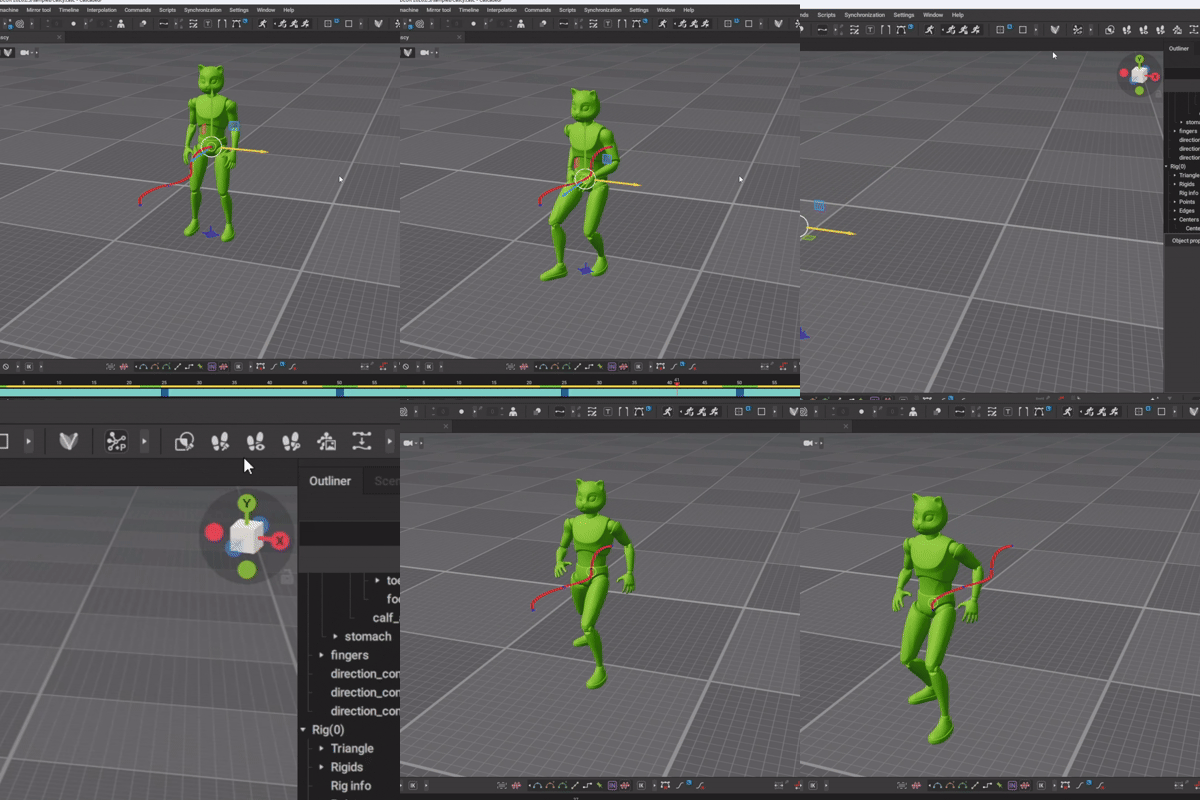
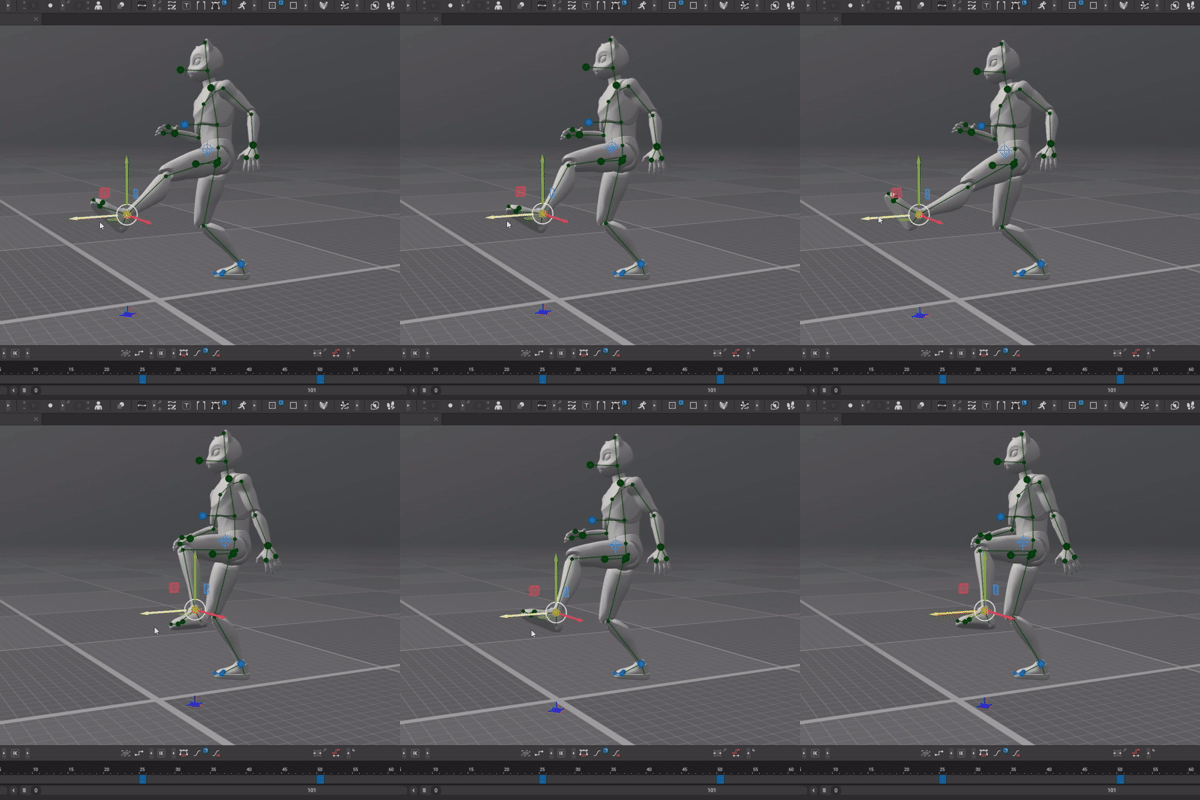
The first episode was about foot sliding. Sometimes you animate a character walking, but the feet start sliding as though they’re walking on ice. So I thought, why not create a funny cartoon around this problem? 😉
Tom helped me explore Fulcrum Motion Cleaning, and I learned how important proper foot contacts and ankle rotations are for believable movement. Cascadeur helped me clean up the sliding, while I still needed to work on the poses, acting and timing manually.
And honestly, this little cartoon taught me more about fulcrums than months of casually using Cascadeur.
Episode 2: AutoPosing
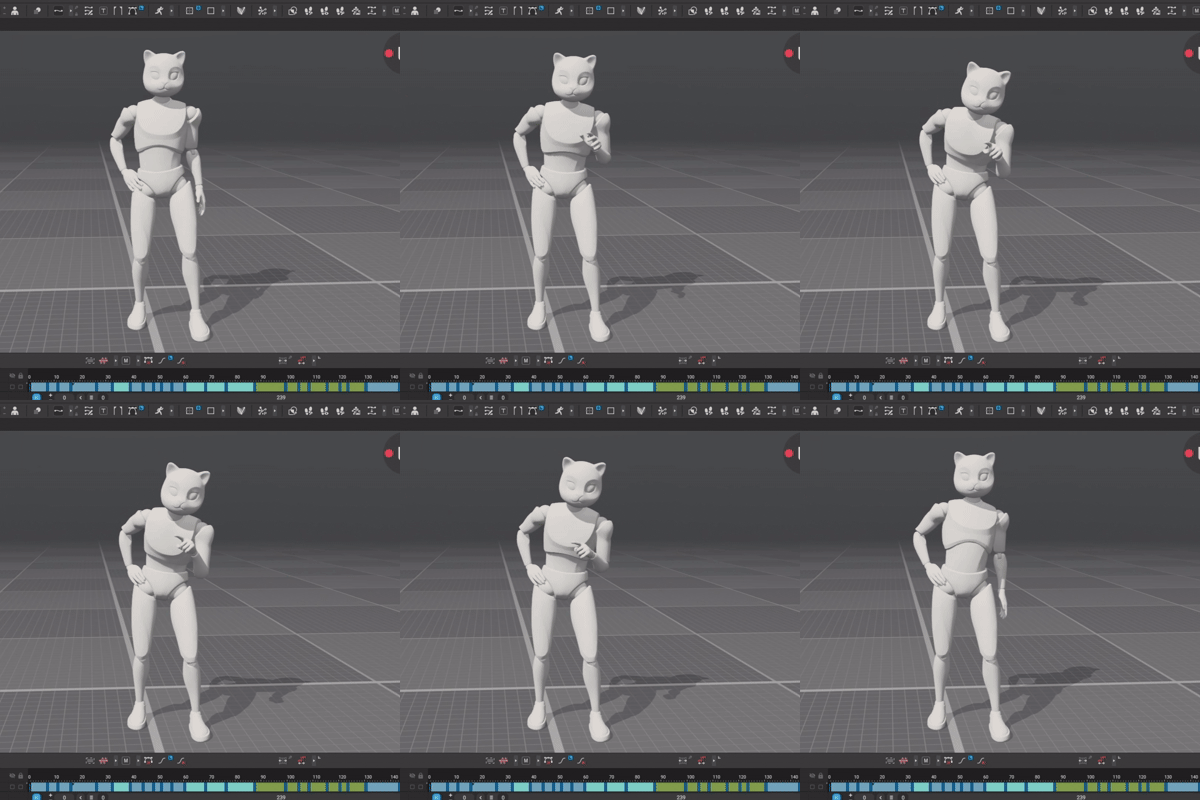
For the second episode, I created a funny situation where a character wants to look cool, but the animator keeps making ridiculous poses. Hahaha!
I experimented with AutoPosing, which helped me adjust connected body parts by moving controllers instead of positioning everything separately. But here’s the problem: Cascadeur doesn’t know which pose is funny 😉 That was my job.
I still had to work on expressions, exaggerated poses and comedic timing manually. The challenge was demonstrating a real feature without making it feel like a boring tutorial. And Tom really enjoyed this episode, which made me very happy.
Episode 3: Cascy Enters My Cartoon World
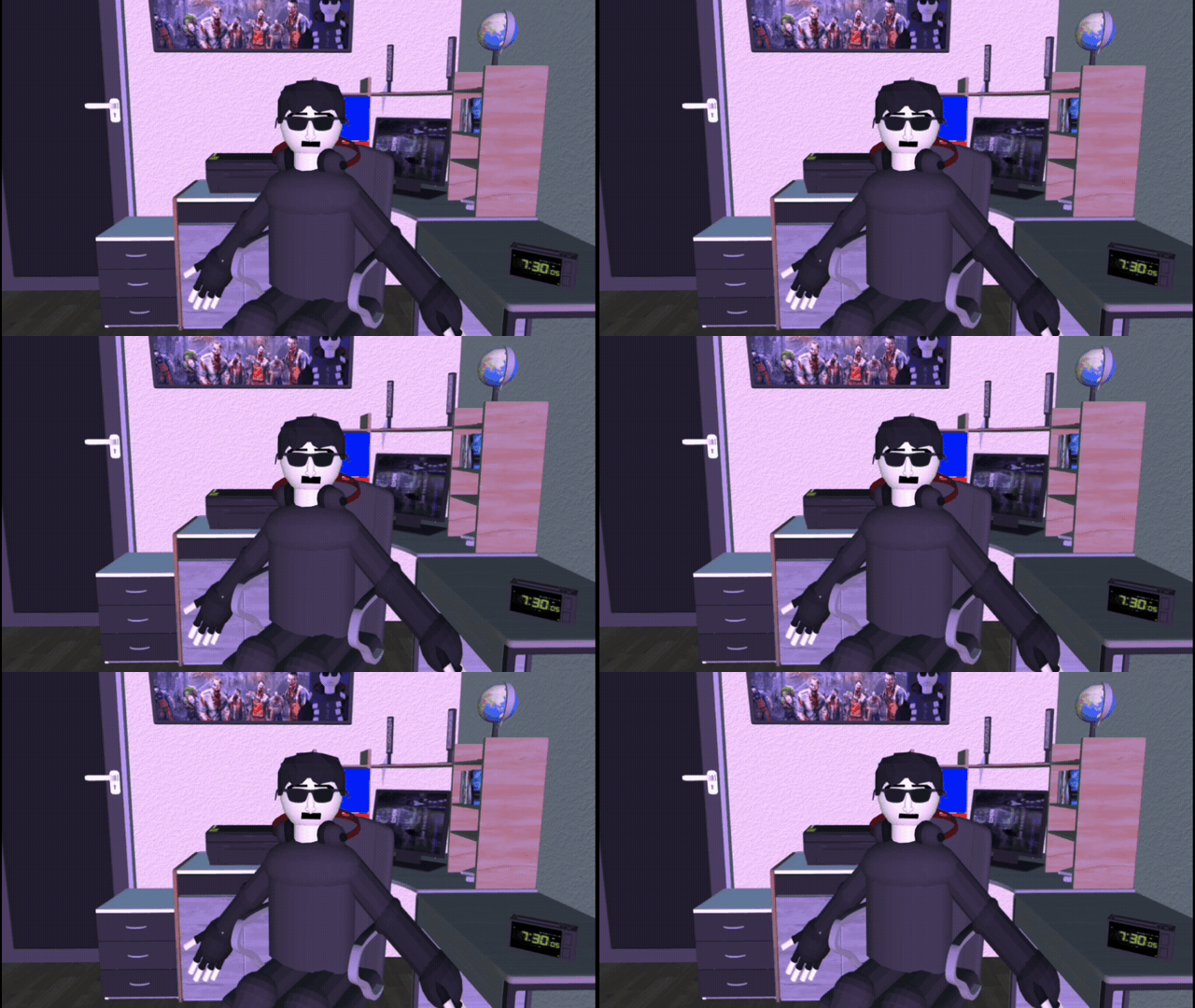
For the third episode, I wanted something different. I’m working in Cascadeur, clicking my mouse, and suddenly… Cascy appears in my room, and both of us get scared! Hahaha.
Unlike the previous episodes, this one focused more on character acting and storytelling than demonstrating a specific tool. The challenge was making the surprise feel funny through exaggerated character movements, camera angles, timing, sound effects and little Grease Pencil strokes. I wanted Cascy to feel like he had actually escaped from Cascadeur into my cartoon world 😉
Well, those were my three little Cascadeur cartoons. And the funniest thing is, even after creating all three, there are still so many Cascadeur features I haven’t explored yet.
My Journey has just begun
Well, that’s my little journey so far. Sometimes I look back at that 11-year-old boy creating clay cartoons using cardboard and thread, who didn’t even have his own phone or computer. And now I’m creating animations for clients and bringing my own little stories to life.
Currently, I’m also working on my first personal animated short film. It’s a little cinematic story I’m putting a lot of love and effort into, and I’ll release it soon. And yeah, I’m using Cascadeur to help me make this film!
So please subscribe to my YouTube channel, @usmantheanimator. I really hope you’ll watch it.
And animation isn’t my only dream. In the future, I want to learn robotics. Maybe one day, instead of animating a character on my computer, I’ll actually make a real robot move. Who knows?
Finally, thanks to Tom and the Cascadeur team for appreciating my work and giving me this opportunity to share my little story. I’m only 18, and I still have so much to learn. This isn’t really my success story; I’m still on my journey.
But one thing hasn’t changed since I was 11: I still love bringing imaginary characters to life.
Maybe years later, I’ll read this article again and laugh at how little I knew today, just like I laugh at my clay cartoons from 2019!
Instagram: @usman_the_animator
Fiverr: usman3dart


